10 Epiphanies
As we have moved through Advent and Christmas together this year, I’ve tried to consistently point out one thing: December 25th was not Jesus’ birthday. Rather, it is the day that on which we celebrate Jesus’ birth. This mattters, in part, because the truth matters. It matters because having to act as if our birth stories are somehow “video taped accounts” is a stumbling block for a lot of people: “I just can’t do that whole virgin birth thing;” “I just have my doubts about a wandering star.” The question isn’t what actually happened. Rather, the question is, “What were our ancestors in faith—Matthew and Luke—trying to say to us?” If you can ask that question, then things lead into the most interesting question of all: “How do the truths that they were trying to share speak to us, 2000 years later?” When it comes to Advent and Christmas, I’m in it for the epiphanies, the insights that change how I look at my faith and my life.
Read More
The Turning Point
If you were to try to tell your life story, chances are that you would talk about turning point moments: “Here was the first teacher who made school come to life for me;” “Here was the day that I picked up a basketball, or my musical instrument, or sang in a choir for the first time;” “Here was my first crush who crushed me” or “Here was the day I met the person that I would one day marry.” Some of the stories we tell might be embarrassing. Some of our stories might be defining moments. Either way, there are moments that we remember forever, that leave us forever changed. There are moments that define us, even if we had no idea how important they were at the time.
Read More
What about Mary?
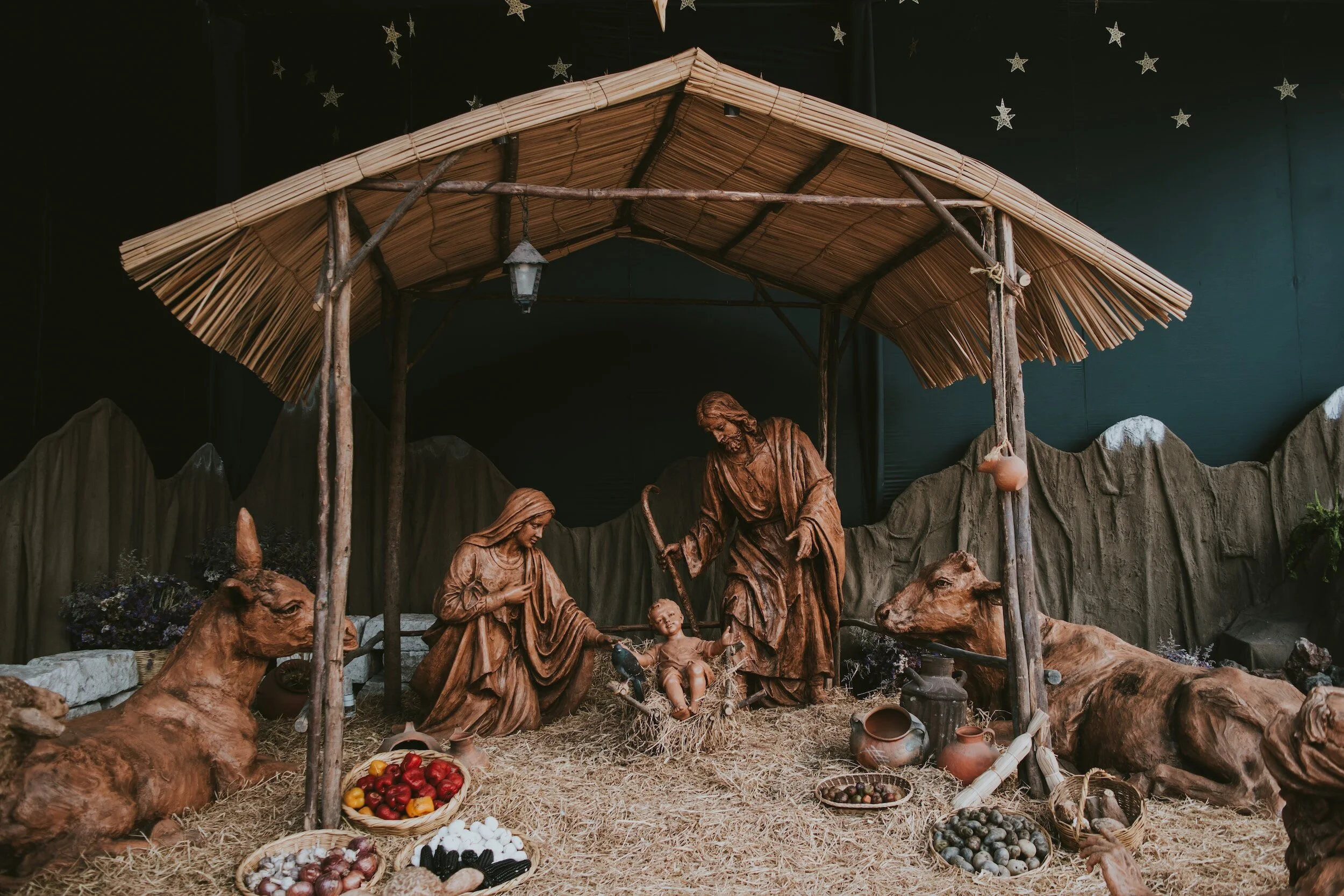
In my last sermon, we spent some time with Joseph. He received terrible, shocking news: his fiance’ was pregnant. He knew that the child was not his. He could have immediately given into rage and made it his singular goal to shame and humiliate Mary. He didn’t. He could have done whatever it took to make sure that his reputation was unharmed. He didn’t do that either. He could have invoked the law and seen to it that Mary was at least punished or perhaps even killed. He didn’t go there.
Read More
What about Joseph?
What do you do when something unexpected happens? Of course, there is a whole category of surprising experiences in life—pleasant surprises, funny moments, delicious ironies—that we welcome. We laugh. We smile. We think to ourselves, “Boy, life is really good!” Sadly, though, those are not the suprises that I’m talking about his morning. No, I’m talking about suprising challenges that come our way: a driver who does something unexpected and, suddenly, we’re exchanging insurance information; a person we thought we really knew—someone we really trusted—until they do something completely out of character and leave us feeling betrayed; the doctor who calls back to tell us that the routine procedure that we just had has generated some not-so-routine results. We’re caught flat-footed. What do we do now?
Read More
Why is choosing the common good so uncommon?
So, here’s a thought experiment. Let’s imagine a coffee shop. There is an owner and a steady set of employees, “baristas” we say today. The majority of those customers are regulars. They walk in at their “regular” time and are served by their “regular” barrista who knows exactly what they mean when they say, “I’ll have the ‘regular.” Without asking, they write the customer’s name on the cup and the drink is right up. People recognize each other. People are nice to one another. It’s a comforting place.
Read More
Let Us Love
For the past 75 years, The Study of Adult Development, run out of Harvard, has been tracking the physical and emotional well-being of over 700 men who grew up in Boston. This study closely followed men from their twenties into their eighties and nineties—one of the longest and most comprehensive studies ever done. Of course, many of the findings are not a huge surprise: don’t drink too much; don’t smoke; exercise often; eat a nutritious diet; maintain a healthy body weight; keep on learning. These are all individual concerns— lifestyle choices.
Read More
"God so loves the world..."
If you are of a certain age, then maybe the most vivid memory of our text this morning is of a guy wearing a clown wig at an N.F.L. football game or some other big pubic event. He was always in the endzone, perfectly positioned so that when the field goal or the extra point was being kicked, he would be visiible for all the world to see: “John 3:16!” The guy’s name was Rollen Stewart. Apparently, after living a rather wild life, he became a born-again Christian. The clown costume and the sign were his way of sharing the “good news,” until 1992, when he was arrested and convicted on three kidnapping charges. He received three life sentences. Of course, this was not John 3:16’s fault…
Read More
The Rest of the Story
Before I talk about Ruth, I want to share two personal stories. Each concerns a moment in my life where I had to make a tough decision. I’m telling my stories in the hopes that they will prompt you to think about yours.
Read More
I've Heard About You
Ruth was a foreigner—a Moabite woman. From the start, we pointed out just how extraordinary it is that there is a whole book in the Bible about a foreign woman who is presented as the model of lived faith. Before we meet Ruth, we meet her future in-laws, a husband (Elimelech), a wife (Naomi) and their two sons. This family goes through wave after wave of terrible challenges: they have to flee Israel because of a famine; they have to build a new life in Moab; Elimelech dies suddenly and they have to grieve him and rebuild their lives again. Eventually, both sons marry Moabite women and life seems to stabilize. For ten years, life is pretty good. Then, in a flash, both of the sons die.
Read More
Wherever You Go, I Go
I’ve been making the case for a while now that what we are called to do is live our faith. Being a part of a faith community can help us live our faith because others may help us to see what a lived faith looks like or they may challenge us when we wander from a faithful path or they may be supports for us when we are going through hard times. Of course, just as importantly, in community, we also get the chance to be there for others in all those same ways. The presence of a loving, caring faith community can be a huge help. However, in the end, what matters is the faith that we live, whether we are at church or not.
Read More
What It Really Means To Be The Church (Part 3)
Americans have been leaving the church for decades. No matter what faith you profess, no matter how conservative or how liberal you and your faith may be, if you still go, there are more and more empty seats around you. There are a host of theories about why this has happened: clergy sexual abuse and church corruption; the failure of the church to speak meaningfully to social changes; the pandemic; and on and on. When you ask people why they left the church, though, few describe actually making a decision to leave. Instead, most people describe a gradual move away from attending until one day they just didn’t go anymore.
Read More
What It Really Means to be the Church? (Part 2)
When I was in grade school, we had a game that was beloved by the students and despised by all the playground supervisors. We called the game, “One, Two, Three…Blacktop!” One of the cool things about the game was that it was never announced ahead of time. You’d just see it start to take shape. One group of people would slowly gather on one side of the playground, across the blacktop. The other group would do the same on the other side of the blacktop. To a casual observer, nothing was happening. Then, someone would call out, “One, Two, Three…Blacktop!” Everyone on each side would start running. The goal was to make it to the other side. Alternatively, the goal was to keep anyone from making it past you. This led to pure carnage—with bodies strewn across the blacktop on both sides. If the blacktop was icy, you got the added thrill of people sliding on top of one another across the pavement.
Read More